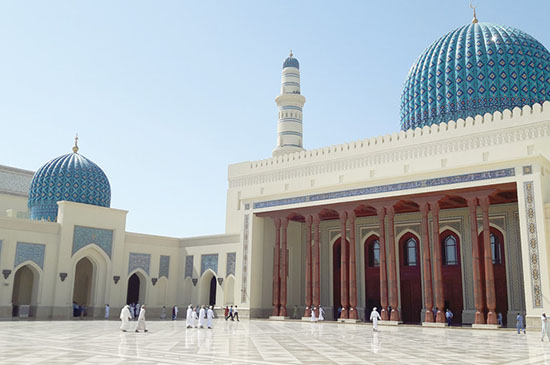
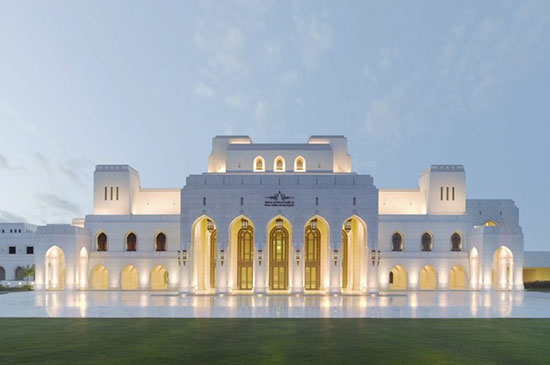
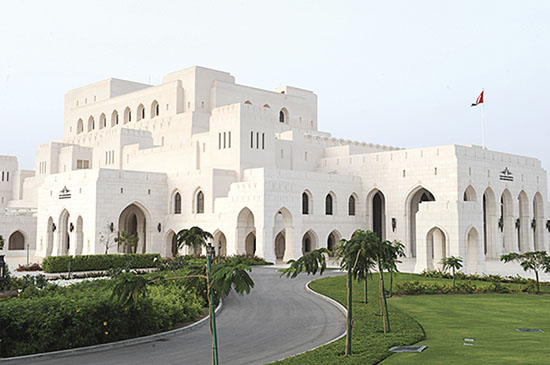
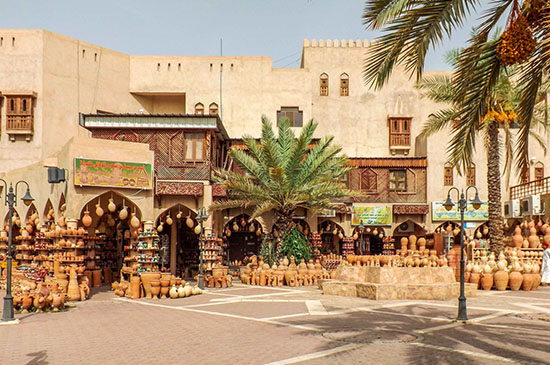
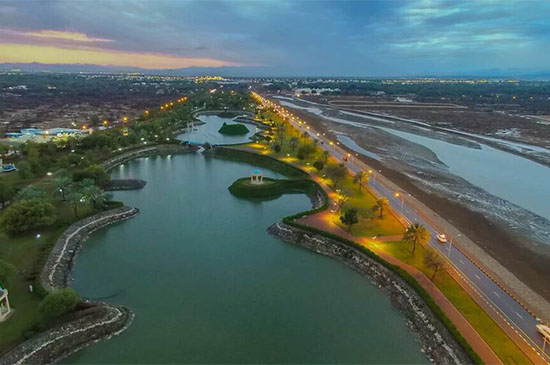
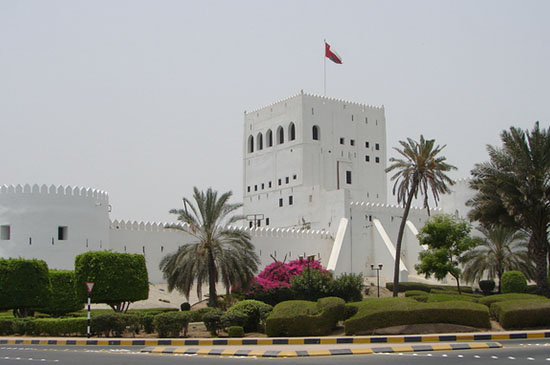
Muscat, the Capital of Oman is located in the Al Batinah region, towards the North Eastern coast of the Sultanate. It is flanked by the majestic Eastern Hajar Mountains on the West and the Gulf of Oman in the East. Its climate is known to be warm and dry in Summer and warm in Winter.
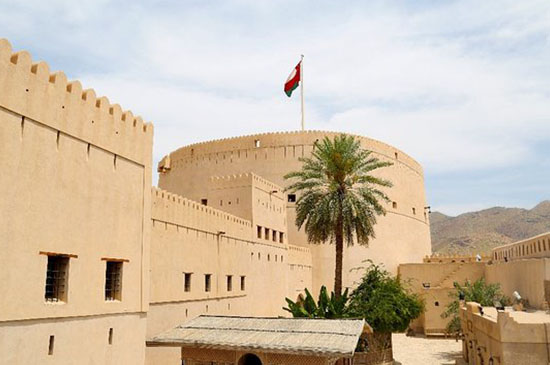
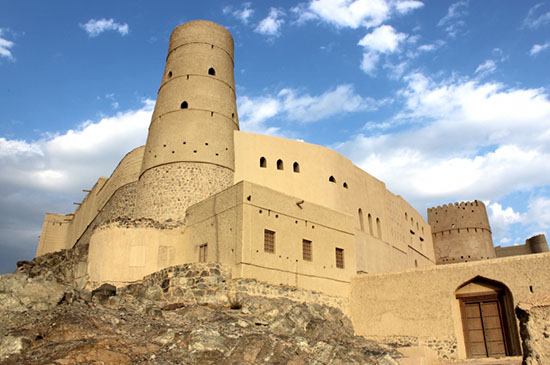
Its uniqueness lies in its rich history dating back to antiquity with fascinating 16th century Portuguese forts and imposing Omani Forts of bygone eras vying for attention with the modernity of contemporary buildings of Oman’s rising businesses and lifestyles.
Muscat is also the largest city in terms of population. As per the National Centre for Statistics and Information (NCSI), Muscat’s population spread across 3,500 sq km, reached 2,90,873 in 2017.
Cleanliness plays an integral part in the lives of the citizens of Muscat. Having won the title many a time, Muscat is credited with being the ‘Cleanest Arab Capital’
Salalah City
Salalah, capital of Oman’s South Western Province of Dhofar is sandwiched between a rugged horse shoe chain of mountains to the North and white beaches with sparkling waters of the Indian Ocean to the South.
Historically known as the ‘Land of Frankincense’, the fragrance of frankincense wafts through the streets of Salalah. Legend has it that Frankincense, still portrayed on ancient Pharaonic temples, was used by Hatshepsut, Egypt’s famous female Pharaoh who is said to have used charred and ground frankincense as kohl eyeliner.
Salalah is known to mesmerize its visitors with its ‘wadis’ or seasonal waterfalls caused by bountiful ‘Kareef’ or monsoon rains on its range of foreboding mountains, salubrious climate, and vistas of green valleys with shady palm trees and banana plantations leading to sparkling white beaches on the Indian Ocean. Its history, culture and economy have always been strongly defined by these endearing geographical features.
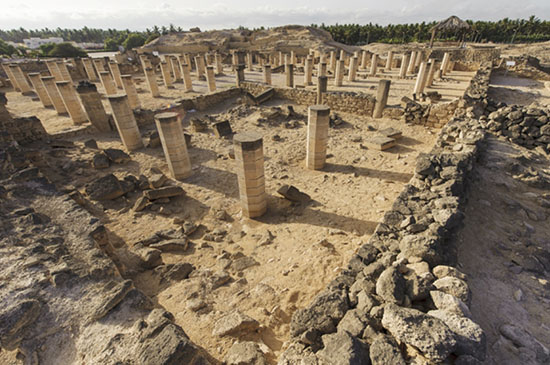
Proof of Salalah’s ancient history and significance has been found by way of inscriptions, excavations and artefacts that belong to a succession of civilizations.
Raysut
CONTENT NOT AVAILABLE !
Thamarit
CONTENT NOT AVAILABLE !
Ma’mul
CONTENT NOT AVAILABLE !
Dawkah
CONTENT NOT AVAILABLE !
Duqm
CONTENT NOT AVAILABLE !
Nafun
CONTENT NOT AVAILABLE !
Dawwah
CONTENT NOT AVAILABLE !
Jibal
CONTENT NOT AVAILABLE !
Fuhud
CONTENT NOT AVAILABLE !
Ghabah
CONTENT NOT AVAILABLE !
Adam
CONTENT NOT AVAILABLE !
Nizwa City
Nizwa, located 164 km South West of Oman’s Capital Muscat, is the Regional Center of the A’Dakhiliya Governorate.
A picturesque city with the grand Al Jabal Al Akhdar (Green Mountain) guarding its flanks on the South, Nizwa is truly blessed with free-flowing rivers, palm trees and orchards that soothe the senses of many a visitor. The balmy climate and sensual environs have from time immemorial given birth to philosophical thought. Many saints and scholars from the region have contributed to Islamic thought and literature through the ages, whereby Nizwa is known to be the “Courtyard of Islam”.
Ibn Battuta, a medieval Moroccan Islamic Scholar and Explorer in his ‘Rihla’ or travelogue that documented his travels and experience across the countries and people and practices of Islam throughout the Muslim world, says this about Oman and Nizwa in particular; “Then we headed to Oman country and walked for six days in the desert. We reached the country of Oman on the seventh day. It is a fertile land with rivers, trees, orchards, palm plantations, and all kinds of fruit. We reached the city of Nizwa, considered to be the main city in this country. Here, people usually eat in the mosques, where each one brings whatever food he has to eat in the mosque courtyard. Everybody shares the food and these people are helpful and courageous.”
Nizwa is renowned for its medieval history, rich composite culture and has a proud heritage of customs and traditions. Its craftsmanship, traditional industries and handicrafts have always been an excellent source of livelihood for its people since ages.
Sur City
Sur, located on the North Eastern coast of Oman; almost at the entrance of the Gulf of Oman, is the capital city of the Ash Sharqiyah Region. It has always played a significant role since ancient times in promoting Oman’s flourishing maritime trade with the Arabian Peninsula, South East Asia and Africa across the Indian Ocean, Arabian Sea, the Sea of Oman.
The Port of Sur has the distinction of being the oldest port in the region with historical records from the 18th and 19th centuries speaking of more than 150 sailing vessels being docked in the bustling port daily. It was also renowned to be a centre for shipbuilding of vessels that travelled across the oceans. Located at the far Eastern part of the Arabian Peninsula, Sur is the first city to witness sunrise in the region.
Given its geostrategic location and role since time immemorial, Sur abounds with fascinating forts and castles like the Sinaysilah Castle, Al Ayjah Castle, Ras Al Hadd Castle and Fanar Ras Al Meel. Its rugged valleys also have soul refreshing wadis, most prominent being Wadi Tiwi, Wadi Shab and Ras Al Hadd. The Ras Al Jinz is renown for its beautiful Turtle Sanctuary as well.
Al Kamil
CONTENT NOT AVAILABLE !
Qurayyat
CONTENT NOT AVAILABLE !
Al Khasab
CONTENT NOT AVAILABLE!
Al Fujayrah
CONTENT NOT AVAILABLE !
Sohar City
Sohar, located in the Al Batinah North Governorate is 234 km North of Oman’s Capital Muscat. Earlier known as the capital of Oman, Sohar earlier depended on fishing, trade and agriculture. Today Sohar is known as the the hub of the Omani industry thanks to the industrial prosperity brought in by the Port of Sohar. This has made Sohar one of the most important cities in Oman.
Sohar, with a spread of estimated 1,700 square kilometers, is the administrative capital of the Al Batinah North Governorate. It has a population of 231,102 people with a large number concentrated in the coastal area of Sohar due to the availability and access to essential facilities, government departments as well as cultivable farmlands that are necessary to support a large population.
Sohar is characterized by hot weather in Summer and warm weather in Winter. It is also characterized by high humidity because of its proximity to the Arabian Gulf. The percentage of humidity rises significantly in the summer and moderates to lower levels for the rest months of the year.
Muscat
CONTENT NOT AVAILABLE !
Musandam Fjords
CONTENT NOT AVAILABLE !
Salalah
CONTENT NOT AVAILABLE !
Ras Al Jinz
CONTENT NOT AVAILABLE !
Masirah Island
CONTENT NOT AVAILABLE !
Jebel Akhdar
CONTENT NOT AVAILABLE !
Misfat al Abryeen
CONTENT NOT AVAILABLE !
Bahla
CONTENT NOT AVAILABLE !
Nizwa
CONTENT NOT AVAILABLE !
Wahiba Sands
CONTENT NOT AVAILABLE !
Al Buraimi
CONTENT NOT AVAILABLE !
Muscat Internationl Airport
The Muscat International Airport is the main international airport in Oman and is situated 32 km from the capital Muscat. A hub for the national flag carrier Oman Air, Muscat Airport connects many regional destinations along with intercontinental services to Europe, Africa and Asia. The newly revamped Muscat International Airport spread over 5250 acres and a significantly larger state of the art terminal opened for traffic on March 20, 2018. It now boasts 82 immigration counters, 118 check-in counters, 10 baggage reclaim belts, 45 gates and a 97m high Air Traffic Control Tower.
The new terminal helped ramp up Muscat Airport’s capacity to handle 20 million passengers a year. Projected expansions in the second and third phases would enable the handling of 24 to 48 million annual passengers at the Airport respectively. The New Terminal which is located between the new and old runways is capable of handling large aircraft such as Boeing 747s and Airbus A380s.
This new building initially brought the Airport's capacity up to 20 million passengers a year upon completion of the first phase. Subsequent enlargements under second and third phases will increase the airport capacity to 24 and 48 million annual passengers respectively. The terminal covers 580,000 sqm and features 118 check-in counters, 10 baggage reclaim belts, 82 immigration counters, 45 gates as well as a new ATC tower, 97 m high. The new terminal is located between the old and new runways and is capable of handling large aircraft such as Airbus A380s and Boeing 747s.
Ras Al Hadd Airport
As part of a larger ecotourism integrated project, the Ras Al Hadd Airport that is located near the town of Sur in South Sharqiya region, is all set to offer tourists an opportunity to fly down from Muscat in lieu of a lengthy road commute. With a projected passenger handling capacity of 5,00,000 per annum, the airport is to complement the further development of a number of eco tourist resorts along the Eastern Coast. This concerted effort is to develop the region considerably and attract discerning tourists in the ecotourism sector having specific interests in the natural world.
The terminal space in the airport is (5,600) m2. Airport works with terminal building capacity of 500,000 per annum annually. It consists of (4) boarding bridges, and (7) booths to complete the traveling procedures. The runway length is (4) km, and width is (75) meters, and the control tower height is (37) m. Construction works for each airport have been divided into three packages, the first one includes airport road network and utilities. The second package contains construction works for the runway, taxiway, apron, and all other accessories.
Port of Khasab
With its strategic location overlooking the Strait of Hormuz in the north of Oman, Port Khasab is located in the Musandam Governorate and gets special attention from the Government in order to encourage commercial movement and benefit the local economy of the Governorate. The port area extends to (159) hectares and consists of a commercial berth which has a length of three hundred meters, and a fixed pier for fishing vessels with a length of one hundred meters in addition to eight floating platforms. The Khasab port is strategically located on the Arabian Gulf.
It has witnessed new expansions, including the addition of major breakwater and commercial berths and the expansion of the port basin to 10 meters to accommodate increasing traffic from neighboring markets following trade with the Islamic Republic of Iran.
The port also receives tourist vessels coming to the Musandam province. In accordance with some specialized consultancy studies, and the planned expansion of the port based on the current five-year plan to be able to accommodate the port's economic and tourist activity in the future, the development of the Khasab port in terms of management and operations is going on to increase its efficiency by building marine docks and finding suitable areas to accommodate commercial and tourist activities and facilities associated with such activities, restrooms and suitable places to receive the owners of boats and commercial boats.
Port Duqm is one of the largest economic projects in the region that will serve the national economy of Oman and contribute to diversifying the sources of national income by attracting enormous industrial investments along with the establishment of special economic zones, development of various sectors, logistics activities and other supporting activities. The project consists of a total of 8,7 km of the breakwater. The project also includes a 19-meter deep entry channel, with commercial berths of 2250m of (18m) depth along with pavements and service berths. The port also includes plans for the construction of dozens of future berths of various types, including berths for liquid, bulk and solid materials. There is a large scope for expansions.
The dry dock takes care of the maintenance and repairs of various sizes of vessels which also include giant oil and gas vessels that have a capacity of 600,000 tons. The project includes two dry basins with a length of 410 meters each, with width varying from 95 meters for the first basin to 80 meters in the second with, heights of 14 meters, and depths of 10 meters, along with a 2,800-meter berth, in addition to the construction of buildings, workshops, and facilities needed for efficient operations.
Duqm Airport
Duqm International Airport (IATA: DQM) is in the vicinity of Duqm in the Al Wusta Region of Oman. The airport officially opened on 24 July 2014. A modern 8,660 sq. ft. passenger terminal with two jet bridges opened on September 17, 2018.
This airport’s key role is to enable the economy of Duqm in terms of integrating the airport with the associated infrastructure in Duqm such as ports, dry dock and new upcoming projects such as the refinery and petrochemical projects, and enabling the tourism sector with the coastal areas of Duqm.
Considered one of the main components of the Special Economic Zone Authority of Duqm (SEZAD), the new airport features a new passenger terminal, an air cargo terminal, an air control tower and other components, including a well-developed road network and a logistics zone to service both the airport and the port, which will contain logistics services related to aviation and port activities, car hire, tanker services, marine shipping offices, warehouses and industrial and real estate services.
The total area of the new passenger terminal is some 5,700 square metres, with the capacity of the airport expected to be around 500,000 passengers per annum. The cargo terminal has been designed to accommodate 25,000 tonnes of goods annually, and with a runway that is four kilometres long, This state-of-the-art Airport will further boost Duqm tourism - it will bring the region closer to the world and play a key role in Duqm's multimodal transport system. The airport will connect Duqm to the capital, Muscat, and other regional airports within Oman as well as with a host of international destinations.
The history of the port dates back to 1976 when it started operations as the Raysut Port. Port Salalah’s strategic location overlooks the Indian Ocean international shipping lines.
In 1998, the first recharge operation started at the container station, which was established as part of the port expansion campaign and which continues even to this day.
Within a few years of operations, the world-class port of Salalah received an increasing numbers of ships and handled huge volumes of containers. Today, the port is the central hub for the distribution of transit containers between the East and West.
The port also contains the general cargo terminal, which was established in 1976. The station contains 11 berths ranging from three meters to sixteen meters, and between 115 meters and 600 meters.
The Salalah Port has been designed to be a terminal for giant vessels from major and secondary shipping lines, with simplified customs procedures and competitive tariffs, all of which have helped the port to become a major recharge center in the entire region.
The Salalah Port Services operate under the management and overall operations of the Salalah Port in accordance with a concession agreement with the Government of Oman. It also manages the port in coordination with the Salalah Free Zone Authority and other companies operating in it to increase local commercial interests. Salalah Port Services operates the port under the supervision of the company. B. Umm for container terminals that own a stake in the company.
Salalah Airport
The Salalah Airport is one of the most promising destinations, given its excellent geographic position and the tourism growth it usually witnesses especially during the Khareef season. The airport was opened on November 11, 2015 with capacity of about two million passengers a year and can be expanded to six million passengers. Its construction area is 150,000 m2 and was built at a cost of (365) million RO. With its state of art systems, equipment and services it can receive large aircraft types.
Since the beginning of the second millennium, as per the vision of Sultan Qaboos bin Said, the Government of Oman seeking to reduce dependence on Oil, took concrete steps to diversify its sources of national income by establishing the Port of Sohar as a specialized port for maritime activities along with the trade of general goods and containers in the city of Sohar. The Port’s area is more than 45 square kilometres. The dimensions of its berths are 16 meters and 25 meters, and has a total length of 6270 meters.
Located 240 km North of Muscat, construction of the Sohar Port commenced in 1999. The Government of Oman invested USD 4.5 billion in the infrastructure of the Port and its related facilities that included wave-breakers, special berths for dry, liquid, and bulk cargo terminals and containers. Gas pipelines between Fahud, Sohar and crude oil piplelines between Muscat and Sohar, construction of a water-cooling plant for factories, a power station, water desalination plant and infrastructure in public corridors such as roads, rainwater drainage pipes and other services.
The Port of Sohar additionally presents industrial and economic zones that have enabled to attract large industrial projects based on Oil and Gas and Mining industries. In addition, a Free Zone has been added to the Sohar Industrial Port. With an area of 4500 ha, it will be further developed to include secondary industrial complexes both petrochemical and mineral as well as have specialized complexes for logistics activities.
Sohar Airport
The coastal city of Sohar, the main city in Batinah Region, is located 220 km North West of Muscat and is on the main road transport route between the Sultanate of Oman and the Emirate of Dubai. Over recent years, Sohar, and the wider Al-Batinah Region, have attracted significant industrial and commercial infrastructure investments.
Sohar Airport, about 13km northwest of Sohar, will provide an alternative, quicker route for travelers wishing to access Sohar and the north of Oman. The Airport will also serve as a new gateway for cargo and courier traffic in northern Oman. In addition, Sohar Airport will serve as an emergency alternative to Muscat Airport for passengers and cargo coming into the Sultanate.
The Airport is being built within the proximity of the major commercial, industrial and economic centers of Sohar, including the Port of Sohar Special Economic Zone. It will complement the plans for a major expressway and rail network, which will underpin the port city’s eventual transformation into a major industrial and economic hub on Al-Batinah coast.
Al Batinah South
Oman’s capital, and far and away its largest city, Muscat offers an absorbing snapshot of the country’s past and present.
Physically, much of the city is unequivocally modern: a formless straggle of low-rise, white-washed suburbs which sprawl along the coast for the best part of 25km, now home to a population nudging up towards the million mark – a quarter of the country’s total. It’s here that you’ll find Oman at its most contemporary and consumerist, exemplified by the string of opulent hotels which line the city’s sand-fringed coastline, backed up by swanky restaurants and modern malls, and honeycombed with a network of roaring, multi-lane highways.
Al Batinah North
Oman’s capital, and far and away its largest city, Muscat offers an absorbing snapshot of the country’s past and present.
Physically, much of the city is unequivocally modern: a formless straggle of low-rise, white-washed suburbs which sprawl along the coast for the best part of 25km, now home to a population nudging up towards the million mark – a quarter of the country’s total. It’s here that you’ll find Oman at its most contemporary and consumerist, exemplified by the string of opulent hotels which line the city’s sand-fringed coastline, backed up by swanky restaurants and modern malls, and honeycombed with a network of roaring, multi-lane highways.
Al Dhahirah
Oman’s capital, and far and away its largest city, Muscat offers an absorbing snapshot of the country’s past and present.
Physically, much of the city is unequivocally modern: a formless straggle of low-rise, white-washed suburbs which sprawl along the coast for the best part of 25km, now home to a population nudging up towards the million mark – a quarter of the country’s total. It’s here that you’ll find Oman at its most contemporary and consumerist, exemplified by the string of opulent hotels which line the city’s sand-fringed coastline, backed up by swanky restaurants and modern malls, and honeycombed with a network of roaring, multi-lane highways.
Al Buraimi
Oman’s capital, and far and away its largest city, Muscat offers an absorbing snapshot of the country’s past and present.
Physically, much of the city is unequivocally modern: a formless straggle of low-rise, white-washed suburbs which sprawl along the coast for the best part of 25km, now home to a population nudging up towards the million mark – a quarter of the country’s total. It’s here that you’ll find Oman at its most contemporary and consumerist, exemplified by the string of opulent hotels which line the city’s sand-fringed coastline, backed up by swanky restaurants and modern malls, and honeycombed with a network of roaring, multi-lane highways.
Sohar
The Sohar Port Concession Area has been extended for the creation of the Sohar Port and Free Zone. The Sohar SEZ has a considerable advantage in terms of logistics following its proximity to the deep-sea Port on the Arabian Sea. The Sohar Free Zone is operated and managed by the Sohar Free Zone LLC.
The Sohar SEZ proffers a host of investment-friendly incentives that include a single window system for obtaining licenses, permits, visas, tax exemptions and customs clearances. It is also known for offering low capital intensive setting up costs. The Sohar Port and its Free Zone’s four industrial clusters include: Petrochemicals, Metals, Logistics and, most recently Food, with the proposed construction of Oman’s first ever terminal to handle agricultural products that would help manage the country’s strategic food reserves better.
A Textiles cluster is next on the cards. The zone attracted more than $300 million in textiles investment in 2017. The proposed Textiles cluster could house projects spinning, knitting, weaving and fabric manufacturing. In recent years, a clear correlation has been noted between the port’s expanding infrastructure and facilities and investments into the free zone.
Competition is fierce between zones throughout the region. Attracting investors, both domestic and international, is a reward reserved for the zones which best understand and meet the needs of their potential clients.
Duqm
Following the establishment of the Special Economic Zone in Duqm (SEZAD) as per the Royal Decree No. 119/2011, the SEZ crowns efforts to diversify the economy. The largest in the region, the Duqm SEZ is spread over 2,000 square kilometers with a 60km long beach front. Development has covered around 800 km or 45% of the area with the remaining area being left for future expansions.
Thanks to its large size, various mega projects have been established here as the Omani Government has ensured that the SEZ is fully equipped in every way to meet the needs of the investors. The Duqm SEZ is divided into 8 key areas that include the Port Duqm, the ship dry dock, the Duqm Airport, the Duqm Refinery, the heavy medium and light industries complex apart from the residential, commercial, logistics and tourism areas.
All necessary measures have been taken while preparing the blue print to prioritize and ensure ecological balance as well as ensure easy commute by SEZ residents using the in land highway network.
The many competitive advantages presented by SEZAD propels it to becoming a marine and logistic hub not only for the Sultanate but also for the entire Middle East region outside the Strait of Hormuz.The establishment of an advanced petrochemical industries complex that would use secured oil and LNG supplies is also on the cards. Another integrated manufacturing area that would utilize natural resources from the Al Wusta Governorate is also set to be established. The SEZ also qualifies to become a hub for fish processing and aquaculture given its abundant fish resources in the region. Duqm promises to become an ideal destination for those who see peace and tranquility along with the enjoyment of salubrious climate both in Summer and Winter coupled with the natural beauty of the region.
All necessary measures have been taken while preparing the blue print to prioritize and ensure ecological balance as well as ensure easy commute by SEZ residents using the in land highway network.
Salalah
The Salalah Free Zone was one of the first Free Zones to be setup amongst many other in Oman. Situated adjacent to the Port of Salalah, the Salalah Free Zone is managed by the Salalah Free Zone Company SAOC. What attracts investors to this Zone is its provision of a investor friendly single window system for permits, licenses, visas and custom clearances and a host of incentives and tax exemptions that helps low initial cost of setting up business in Oman.
Created by Royal Decree No. 62/2006 the Salalah Free Zone belongs to the Omani Government. It is located on the pivotal shipping lanes that interconnect East & West international markets. The SFZ is now all set to attract FDI with a slew of investor friendly incentives.
Featuring one of the region’s highly developed business environments the SFZ fosters collaboration and partnerships across borders and industries. Turnkey facilities set amidst world-class infrastructure are coupled with support services for startups and multinationals.
The Salalah Free Zone is a growing global hub for:-
Chemicals & Materials Processing Sector
Assembling, Packaging & Packing Sector
Logistics & Distribution Sector
The Salalah Free Zone lies adjacent to Port of Salalah, one of the largest container ports in the world. It interconnects markets of the Middle East, Asia and Africa with various international markets in Europe and the United States.
Value added investment provisions help the SFZ businesses remain highly competitive in their own niche markets. These highly optimized incentives underscore Salalah Free Zone’s cost-competitive market reach and tangible support for development.
Al Mazunah
The Al Mazunah Free Zone (AMFZ), which is located in the Dhofar region in Southwest Oman, is another important hub for investors in the Trading, Light Industry and assistant services sectors. The highlight of this zone is the smooth access it provides to the Yemeni market, which in turn provides the benefits of cheaper labor and a large population base.
Sohar
The area was founded in November 1992.It is situated in Batina Region which is (200 km) from Muscat and (180km) from Dubai.
Sohar which is considered the second industrial area in Oman provides its factories with the facility of entering both the local and international markets. Due to its distinct location, which is near to the main export outlets in the region, Sohar Industrial Area has a lot of factories. Sohar Port, which is located nearby the industrial area, is being carried out in three stages. It will be able to encompass the fifth generation of containers. This project and other big projects there have contributed attract many of the international companies to Sohar Industrial Area. The products produced in Sohar Industrial Area include marble, paper recycle, leather products, furniture, tooth paste, soft drinks, ice-cream, glue, glass, metal bars, and motor oils.
Rusayl
Rusayl Industrial area is situated in Muscat Governorate. It extends to cover a land which amounts to 340 Hectare.220 Hectare of which have been fully developed and divided into different pieces of land.
Rusayl Industrial area, since its foundation in 1983, is considered the Omani main Industrial area. It includes a large and variable group of factories which produce a large group of commodities such as chemicals, opticals, electrical cables, foodstuff, clothes, paints, etc.
Like other Industrial areas managed by the Directorate General of Industrial Areas, Rusayl Industrial Area provides the Industrial investors with various and first class advantages and services covering wide areas for building factories companies offices, utilities of electricity, water, gas, post, communication and treatment of sewage water, getting rid of hard refuse and other remains, housing and roads networks, banks, restaurants, commercial shops, mosques, post offices, and medical clinics. In addition, Al-Raseel Industrial Area embraces governmental offices related to industry like customs, fire brigade, and an office for Oman Chamber of Commerce and Industry.
Samail
The Samail Industrial Estate is located in the Wilayat of Samail in Al Dakhiliyah Governorate, about 45 km away from Muscat International Airport. It occupies an area of 7.4 million square meters. The Samail Industrial Estate was established in in 2010, and has over 130 investors with signed leases. Significant efforts are being made by the management of the Public Establishment for Industrial Estates to accelerate the implementation of infrastructure projects for the Samail Industrial Estate.
Al Buraimi
Al Buraimi Industrial area was founded in 1998 in Al Buraimi Governorate. It enjoys a strategic commercial position on the border with UAE. In the light of its distinct geographical situation it provides the investors with the possibility of marketing their products via air and sea through the sea, air and land outlets in the Sultanate of Oman and UAE. Thus, the area gives excellent opportunities to the investors who like to enter the local market and the markets of the Gulf Region plus Middle Asia.
Knowledge Oasis Muscat (KOM)
Knowledge Oasis Muscat (KOM) is a 20,000 square meter technology park located at Rusayl. For start-up companies that require a total support package, KOM created The Knowledge Mine (TKM) a business incubator program that offers tenants a combination of subsidized offices and utilities in addition to a variety of business support program services.
KOM is the ideal location for businesses starting or expanding in the Middle East. Factors important to investors, employers and employees can all be satisfied in the Sultanate. Competitively priced land and office spaces, combined with a high quality of life make Muscat an excellent place to live, work and for recreation!
Sur
Sur Industrial Area is located in Sur Wilayah in the Eastern Region which is 300 km from Muscat. It was founded in 1999. The main factories in the industrial area are: Oman Company for Natural Liquid Gas, National Company of Gas, and Omani – Indian Company for Fertilizers.
The geographical location of Sur, overlooking Oman Sea and the Arabian Sea which is near to international markets made it the focus of the biggest international investors. The choice of the industrial area in Qalhat came to give it more importance; especially, the area which is characterized by the existence of a deep natural coast edge which helps to build short sea platforms for shipping of equipment’s and goods and enabling the big ships to anchor near the shipping area which makes the shipping and unloading process safe and easy and of less costs.
Nizwa
Nizwa Wilayah is located in Al Dakhilia Region; it is 180 km from Muscat. Nizwa Industrial Area plays and important role in the development of industry in the regions of Al Dakhilia, Al Wostah, and Al Dhahira. After completing the dual highway connecting Muscat and Nizwa, the factories in the region will entertain an additional and faster advantage for marketing its products in Muscat, plus the facility of export via Muscat International Airport and Sultan Qaboos Airport. Many industries are manufactured such as ceramic and plastic, medical products, tea packaging, mineral water, water tanks, steel, oil, and foodstuff.
Raysut
Raysut Industrial Estate was founded in November 1992.It is situated in Salalah in the south of Oman Sultanate. Raysut Industrial Estate is about 54km from Salalah strategic port which is considered the only port between Europe and Singapore which can encompass the biggest international containers .Undoubtedly, the development of Salalah, in addition to the establishment of the free zone near the port leads to attract international investors to Raysut Industrial Estate, which in turn would turn Salalah into a main air and sea freight area making it an industrial development center.
Hence the government works on expanding the industrial area which was provided with supported natural gas. A lot of products are manufactured in Raysut Industrial Estate such as stationery, files, ice, canning; and supplying fish, frozen chickens, plastic pipes, metals manufacture, medical supplies, solar heaters, flour, fertilizers, plants fat, and cement.